Plain-English guides to how healthcare practices are owned, organized and bought, and how revenue teams find, prioritize and grow them.
Practice Intelligence is software for companies that sell to healthcare practices, groups and MSOs.
Read the answer →The core problemThe location is a site and the group is the account. MSOs, DSOs, PE platforms and health systems own practices that still carry their old names, so the buyer rarely shows on the website.
Read →ReferenceMSO, DSO, NPPES, CCN, FQHC and more than 40 other terms, in plain English.
Browse →Who buys, how they pay, and why each market is hard to sell into.
Physician services are being rolled up by MSOs, PE platforms and health systems, so the buyer is often a level above the practice you can see.
Hospital deals stall when vendors sell to a facility and the decision sits with the system.
Aesthetics is cash-pay, fast-growing and consolidating, and most of it is invisible to the registries traditional healthcare lists are built on.
Dental is split between independents and fast-growing DSOs, and the two buy so differently that they behave like separate markets.
Behavioral health and outpatient therapy span several modalities with different payers and buyers, and both are consolidating faster than most lists can track.
Senior living runs from housing to skilled clinical care, and the operator, owner and building are often three different companies.
Eye care and hearing care mix clinical care with retail, and many acquired practices keep their local names.
Labs, imaging centers and pharmacies are owned by health systems, operators, physician groups and independents, and each owner buys differently.
More detail: FQHCs and community health centers · Specialty pharmacies
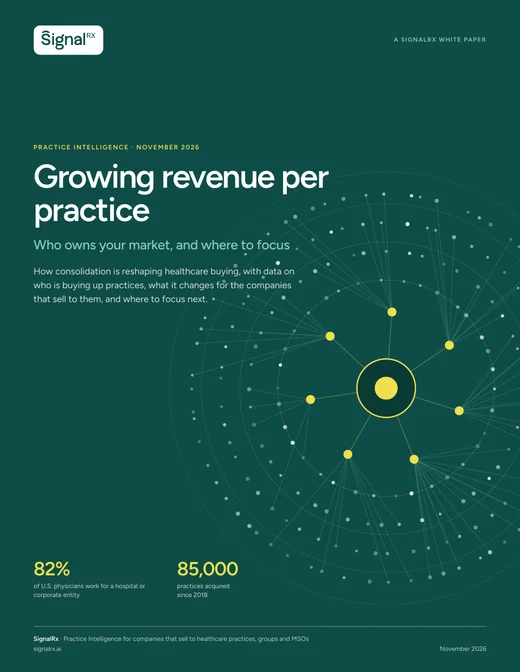
82% of U.S. physicians now work for a hospital or corporate owner, and 85,000 practices have changed hands since 2018. See what that means for who buys, and where to focus.
11 pages · PDF · We'll email it to you, and you can download it right away.
We'll show you 10 real accounts like your best customers, who owns them, and who to call first.
SignalRx is Practice Intelligence for teams that sell to healthcare practices, groups and MSOs.